
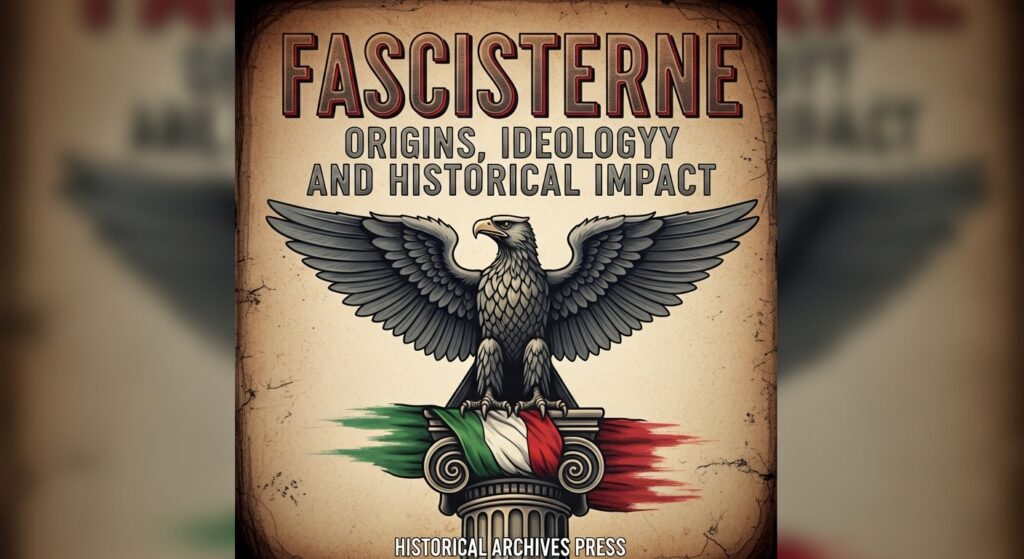
The term fascisterne refers to the fascists, particularly in a European historical context. Fascism was a political ideology and movement that emerged in the early twentieth century, characterized by authoritarian leadership, strong nationalism, suppression of opposition, and centralized control. Fascisterne played a significant role in shaping some of the most dramatic and destructive events of modern history.
Understanding fascisterne requires examining the origins of fascism, its ideological foundations, how it spread across Europe, and the lasting consequences it left behind.
The Origins of Fascism
Fascism first took organized political form in early twentieth-century Italy under the leadership of Benito Mussolini. After World War I, Italy faced economic instability, social unrest, and dissatisfaction with the outcomes of the war. Mussolini capitalized on these frustrations by promoting a movement that promised national revival, unity, and strength.
In 1922, Mussolini and his supporters marched on Rome, leading to his appointment as Prime Minister. Over time, he dismantled democratic institutions and established a dictatorship. His regime became the model for other fascist movements across Europe.
Core Ideological Principles
Fascisterne were united by several key ideological elements:
Extreme Nationalism
Fascism emphasized intense loyalty to the nation above all else. National identity was glorified, and citizens were encouraged to subordinate personal interests to the goals of the state.
Authoritarian Leadership
Fascist systems centered on a single powerful leader. This leader was portrayed as embodying the will and destiny of the nation. Political opposition was suppressed, and democratic processes were eliminated.
Militarism
Fascisterne often glorified military strength and expansion. War was viewed as a tool for national growth and a demonstration of power.
Anti-Communism and Anti-Liberalism
Fascism positioned itself against both communist and liberal democratic ideologies. Fascisterne rejected individual freedoms if they conflicted with state authority.
Propaganda and Control
Control of media, education, and cultural institutions allowed fascist regimes to shape public opinion. Propaganda was used extensively to promote loyalty and silence dissent.
Fascism in Germany
While fascism began in Italy, it reached its most extreme and destructive form in Germany under Adolf Hitler and the Nazi Party. German fascism, known as Nazism, incorporated strong racial ideology and antisemitism.
After economic hardship and political instability in the Weimar Republic, Hitler rose to power in 1933. His regime established totalitarian control, leading to aggressive expansionist policies and the outbreak of World War II.
The Nazi government’s policies resulted in the Holocaust, one of the most horrific genocides in history, in which six million Jews and millions of others were systematically murdered.
Fascisterne in Other European Countries
Fascist movements appeared in several other European nations during the interwar period. While not all achieved full control of government, they shared ideological similarities.
In Spain, Francisco Franco established an authoritarian regime after the Spanish Civil War. Although Franco’s rule differed in some respects from Italian and German fascism, it shared authoritarian characteristics and nationalist themes.
Various fascist-inspired groups also emerged in France, Hungary, Romania, and other countries. These movements often thrived during times of economic crisis and political instability.
Social and Economic Policies
Fascist regimes implemented centralized control over many aspects of society. While private property was generally allowed, the state maintained significant influence over industry and labor. Independent trade unions were abolished and replaced with state-controlled organizations.
Education systems were restructured to promote loyalty to the regime. Youth organizations were formed to instill fascist values from an early age. Cultural expression was monitored to ensure alignment with official ideology.
The Downfall of Fascist Regimes
The expansionist ambitions of fascisterne ultimately led to global conflict. World War II brought devastation across Europe and beyond. By 1945, the Axis powers had been defeated.
Mussolini was captured and executed in 1945. Hitler died in Berlin as Allied forces closed in on the city. The defeat of Nazi Germany marked the collapse of the most extreme fascist regime.
In the aftermath, Europe underwent significant political transformation. Democratic institutions were rebuilt, and international organizations were established to promote cooperation and prevent future conflicts.
Lasting Impact
The legacy of fascisterne remains significant. The atrocities committed during fascist rule reshaped international law, leading to the establishment of human rights conventions and war crimes tribunals.
Institutions such as the United Nations were created in part to prevent the rise of aggressive nationalist regimes. The memory of fascism also continues to influence modern political discourse.
Scholars and historians study fascism to understand how economic hardship, political instability, and social division can create conditions for authoritarian movements to gain power.
Fascism in Contemporary Discussion
Although the original fascist regimes fell decades ago, the term fascisterne is still used in political discussions today. It often describes movements or individuals perceived as authoritarian or ultra-nationalist.
However, it is important to distinguish between historical fascism and modern political disagreements. The historical context of fascisterne involved totalitarian control, systematic violence, and suppression of fundamental freedoms.
Understanding this distinction helps maintain accurate historical awareness and prevents misuse of the term.
Conclusion
Fascisterne played a central role in shaping twentieth-century history. Emerging from social and economic turmoil, fascist movements promised national revival but ultimately brought oppression, war, and widespread suffering.
From Mussolini’s Italy to Hitler’s Germany and beyond, fascism demonstrated the dangers of unchecked authoritarian power and extreme nationalism. Its legacy continues to serve as a warning about the importance of democratic institutions, civil liberties, and international cooperation.
By studying the history of fascisterne, societies can better recognize the conditions that allow authoritarian ideologies to flourish and work to protect democratic values for future generations.