
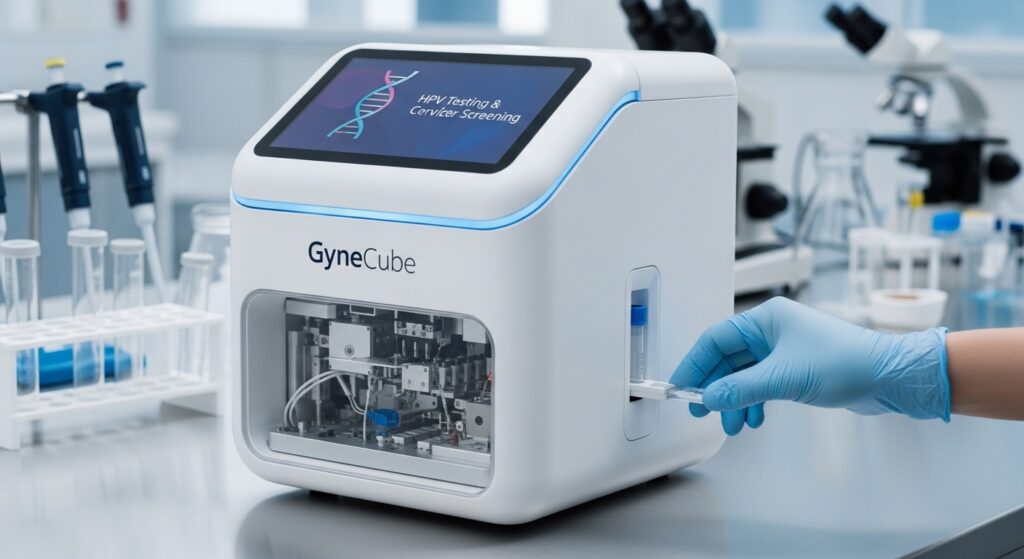
Advances in medical technology have significantly improved the way healthcare professionals detect and manage diseases. One of the most important areas of progress is in women’s health, particularly in the early detection of cervical cancer. A notable innovation in this field is GyneCube, a compact and automated system designed to improve the efficiency and accuracy of HPV testing.
GyneCube is used in clinical laboratories to detect human papillomavirus (HPV), a group of viruses known to be a major cause of cervical cancer. By automating the testing process and delivering reliable results quickly, GyneCube helps healthcare providers perform high-quality screening and identify infections that may lead to serious health conditions.
Understanding HPV and Cervical Cancer
To appreciate the importance of GyneCube, it is essential to understand the connection between HPV and cervical cancer.
Human papillomavirus (HPV) is one of the most common viral infections worldwide. It spreads mainly through intimate skin-to-skin contact and affects millions of people every year.
There are many types of HPV, but some high-risk strains are strongly linked to cervical cancer. These strains can cause abnormal cell changes in the cervix, which may eventually develop into cancer if not detected early.
Because HPV infections often show no symptoms, screening plays a crucial role in early detection and prevention.
What Is GyneCube?
GyneCube is an automated molecular diagnostic system designed to detect HPV DNA in clinical samples. The device is primarily used in medical laboratories and hospitals as part of cervical cancer screening programs.
The system is known for its compact design and fully automated workflow. Once samples are loaded into the machine, GyneCube performs the testing process with minimal manual intervention.
Key characteristics of GyneCube include:
-
automated HPV detection
-
high accuracy and reliability
-
fast processing time
-
user-friendly laboratory operation
By simplifying the testing process, GyneCube helps laboratories deliver faster results while maintaining high diagnostic standards.
How GyneCube Works
The operation of GyneCube involves advanced molecular biology techniques used to detect viral genetic material.
Sample Collection
The process begins with the collection of cervical samples from patients during routine screening procedures.
Healthcare professionals collect cells from the cervix using specialized swabs or brushes. These samples are then sent to the laboratory for analysis.
DNA Extraction and Detection
Inside the GyneCube system, the sample undergoes automated analysis to detect HPV DNA. The device uses molecular amplification techniques to identify viral genetic material.
If high-risk HPV types are present, the system detects their DNA sequences and produces a positive result.
Automated Analysis
One of the main advantages of GyneCube is its automation. The device performs several steps automatically, including:
-
sample preparation
-
nucleic acid amplification
-
detection of viral DNA
-
result interpretation
Automation reduces the chance of human error and increases consistency across multiple tests.
The Role of GyneCube in Cervical Cancer Screening
Cervical cancer screening is essential for identifying precancerous changes before they develop into serious disease.
Traditionally, screening relied on the Pap smear test, which examines cervical cells under a microscope for abnormalities. While Pap tests remain valuable, HPV testing has become increasingly important.
GyneCube contributes to screening programs by providing accurate HPV detection, allowing healthcare providers to identify patients who may need further monitoring or treatment.
Early Detection
Detecting high-risk HPV infections early allows doctors to monitor patients closely and intervene before cancer develops.
Risk Assessment
HPV testing helps identify individuals at higher risk for cervical cancer, enabling personalized screening strategies.
Improved Screening Efficiency
Automated systems like GyneCube allow laboratories to process multiple samples efficiently, supporting large-scale screening programs.
Advantages of GyneCube Technology
Several features make GyneCube a valuable tool for modern diagnostic laboratories.
Automation
Automation is one of the most significant advantages of GyneCube. By minimizing manual steps, the system reduces laboratory workload and improves testing consistency.
High Accuracy
Molecular detection techniques used by GyneCube provide highly accurate results, ensuring reliable identification of HPV infections.
Faster Turnaround Time
Compared to traditional manual testing methods, automated systems can deliver results more quickly.
Faster results allow healthcare providers to make timely decisions regarding patient care.
Compact Design
GyneCube is designed to be compact and efficient, making it suitable for laboratories with limited space.
GyneCube in Public Health Programs
Many countries have implemented cervical cancer screening programs to reduce disease incidence and mortality. Technologies like GyneCube can support these programs by enabling efficient HPV testing.
Public health initiatives often aim to:
-
increase screening coverage
-
detect high-risk HPV infections early
-
monitor infection trends
-
improve access to diagnostic services
Automated systems help laboratories process large numbers of tests while maintaining quality standards.
The Importance of HPV Screening
Regular HPV screening is a key component of cervical cancer prevention.
Health experts recommend routine screening for women within specific age groups because HPV infections may persist silently for years before causing symptoms.
Screening programs help:
-
detect infections early
-
identify abnormal cell changes
-
prevent cancer development
Technologies like GyneCube support these efforts by providing accurate and efficient diagnostic tools.
The Future of HPV Testing Technology
Medical diagnostics continue to evolve as new technologies improve disease detection and laboratory efficiency.
Future advancements related to systems like GyneCube may include:
Enhanced Automation
Diagnostic devices may incorporate even more advanced automation features to streamline laboratory workflows.
Integration with Digital Health Systems
Laboratory systems may integrate directly with electronic medical records, allowing faster communication between laboratories and healthcare providers.
Expanded Molecular Testing
Technologies used for HPV detection could also be applied to other infectious diseases or genetic conditions.
Global Screening Accessibility
Improved diagnostic systems may help expand screening programs in regions with limited healthcare resources.
Supporting Women’s Health Through Innovation
Innovations like GyneCube demonstrate how technology can improve healthcare outcomes. By enabling accurate and efficient HPV testing, the system contributes to early detection and prevention of cervical cancer.
Advances in diagnostic tools also support healthcare professionals by providing reliable data that guides treatment decisions.
As screening technologies continue evolving, they play an essential role in protecting women’s health worldwide.
Conclusion
GyneCube represents an important advancement in the field of molecular diagnostics and cervical cancer screening. By automating the detection of HPV DNA, this innovative system improves laboratory efficiency, enhances diagnostic accuracy, and supports large-scale screening programs.
Early detection remains one of the most effective strategies for preventing cervical cancer, and technologies like GyneCube make it easier for healthcare providers to identify high-risk infections. Through improved testing methods and expanded screening initiatives, medical science continues to move toward a future where cervical cancer becomes increasingly preventable.
As healthcare technology progresses, systems like GyneCube will continue to play a vital role in advancing women’s health and strengthening global disease prevention efforts.