
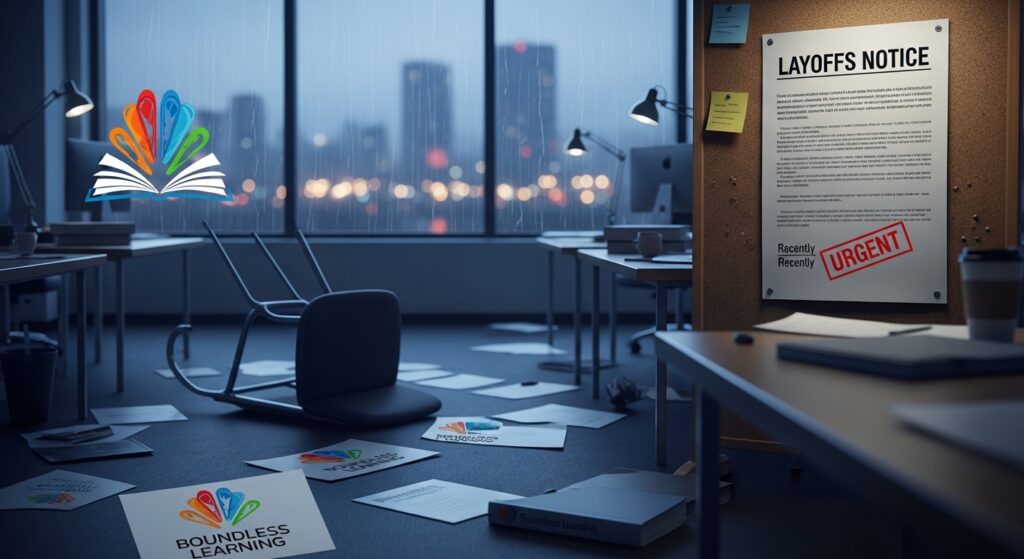
The education sector is undergoing a seismic shift, and recent news about Boundless Learning layoffs has sparked conversations across the industry. Once hailed as a trailblazer in the online learning space, Boundless Learning’s sudden reduction in workforce has left many wondering about its implications. What does this mean for employees? How will students fare amidst these changes? As we dive deeper into the situation, it becomes clear that the ripples of such layoffs extend far beyond company walls, affecting everyone involved in the educational journey. Let’s explore what led to this development and its broader impact on an already evolving landscape.
Reasons for the Layoffs
The recent layoffs at Boundless Learning stem from a mix of financial challenges and strategic missteps. Rapid growth in the ed-tech sector initially fueled their expansion, but sustaining that momentum proved difficult.
As competition intensified, Boundless struggled to differentiate its offerings. This inability to carve out a unique niche led to declining user engagement and revenue shortfalls. Investors became restless, pressuring the company for more robust performance.
Additionally, shifts in educational needs also played a role. The pandemic accelerated trends toward personalized learning and hybrid models—areas where Boundless lagged behind competitors.
Cost-cutting measures emerged as an unfortunate necessity. Layoffs were seen as a way to stabilize finances while attempting to refocus on core strengths amidst uncertainty in the market landscape.
Impact on Employees and Students
The Boundless Learning layoffs have sent shockwaves through the education community. Employees, many of whom dedicated years to shaping innovative learning solutions, now face uncertainty. The loss of jobs not only affects their livelihoods but also their emotional well-being.
Students are caught in the crossfire as well. With fewer staff members available to support them, academic guidance and mentorship may suffer significantly. This can disrupt learning experiences and diminish overall educational quality.
Moreover, existing programs may be put on hold or cut entirely due to resource constraints. Students who relied on these services find themselves grappling with a lack of continuity in their education paths.
For both employees and students, this situation highlights the fragility within the ed-tech sector during economic shifts. It raises pressing questions about sustainability and adaptability in an industry that thrives on innovation and support.
Criticisms of Boundless Learning’s Business Model
Boundless Learning has faced scrutiny for its business model, primarily due to a lack of sustainability. Critics argue that the company prioritized rapid growth over solid educational outcomes. This approach often left students feeling disconnected from meaningful learning experiences.
Additionally, many believe that Boundless Learning’s reliance on subscription-based revenue undermines the quality of education. Students may feel pressured to engage with content designed more for retention than comprehension.
The focus on profit margins instead of pedagogy raises concerns about accessibility too. Many potential learners are priced out, leading to a disenfranchisement among diverse student populations.
Some educators have expressed disappointment regarding the company’s insufficient investment in teacher training and support systems. A strong educational platform should empower instructors rather than sideline them in favor of technology-driven solutions.
The Future of Education Technology Companies
The future of education technology companies is poised for a transformative shift. As the landscape evolves, innovation will likely drive success. Companies that adapt to emerging technologies, like artificial intelligence and personalized learning platforms, stand to gain significant advantages.
Moreover, there’s an increasing demand for hybrid models combining online and traditional learning methods. This flexibility can enhance student engagement and retention rates.
Sustainability in business practices is becoming vital as well. Education tech firms prioritizing social responsibility may attract more users who value ethical considerations alongside educational outcomes.
Partnerships with educational institutions could also play a crucial role in shaping future strategies. Collaborative efforts ensure products meet real-world needs while fostering community support.
As competition heats up, focusing on user experience becomes essential. Intuitive interfaces and responsive customer service can make or break a company’s reputation within such a dynamic market.
How Other Education Companies Can Avoid Similar Situations
Education companies can learn valuable lessons from the Boundless Learning layoffs. One key strategy is to diversify revenue streams. Relying solely on one model can be risky. By exploring partnerships or offering multiple services, businesses can create a more stable financial foundation.
Staying attuned to market demands is also crucial. Companies should regularly seek feedback from both students and educators. This helps ensure that products remain relevant and effective.
Investing in employee well-being fosters loyalty and productivity. Providing support during challenging times encourages resilience within teams, allowing them to adapt when faced with uncertainties.
Embracing innovation keeps education companies competitive. Staying ahead of technological trends enables businesses to pivot quickly in response to changes in the industry landscape. Adopting flexibility as a core value will equip companies for future challenges while supporting sustainable growth.
Conclusion
The recent layoffs at Boundless Learning have raised important questions about the sustainability of education technology companies. The challenges they face can serve as a cautionary tale for others in the industry. Companies must prioritize adaptability, innovation, and understanding their audience’s needs.
As the landscape of educational technology continues to evolve, remaining attuned to market demands is critical. By learning from Boundless Learning’s experience, other organizations can take proactive measures to safeguard against similar outcomes and promote lasting success in this competitive arena.
Fostering an environment that values employee welfare while meeting student needs will be key for future growth within the sector.