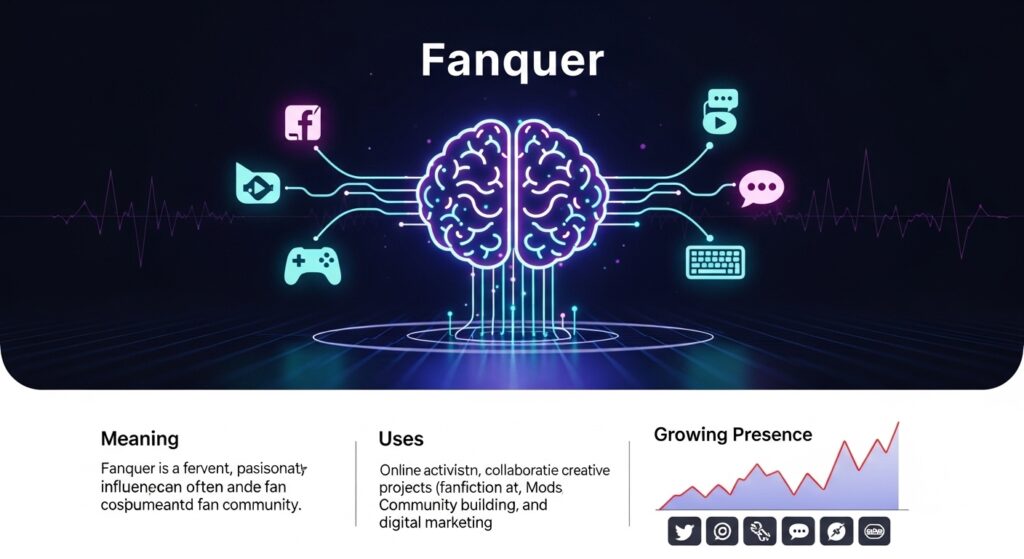
The term fanquer has recently started appearing in online searches and discussions, drawing attention from users curious about its meaning and application. Like many emerging keywords, fanquer does not yet have a universally recognized definition, but its increasing visibility suggests that it holds relevance in certain digital or creative contexts.
In today’s fast-evolving digital landscape, new words often emerge as part of branding, online identities, or niche communities. Fanquer appears to be one such term, representing a blend of creativity, uniqueness, and adaptability.
What Is Fanquer?
At its core, fanquer can be described as a flexible and evolving term. It may function as a name, a brand identity, or even a conceptual label depending on how it is used. Unlike traditional words with fixed meanings, fanquer gains significance through context and usage.
In some interpretations, it could be associated with online personas or platforms. In others, it might represent a creative project, business name, or digital product. The lack of a strict definition allows fanquer to be versatile and open to interpretation.
Possible Origins of Fanquer
The origin of fan-quer is not clearly documented, which adds to its intrigue. It may be a coined or invented word, created to stand out in a crowded digital environment.
Many modern terms are formed by blending sounds, modifying existing words, or creating entirely new combinations. Fan-quer could follow this pattern, making it unique and memorable.
Its structure suggests that it may have been designed for branding purposes, where originality and distinctiveness are key factors.
Fanquer in Digital Culture
Digital culture plays a significant role in the spread of terms like fan-quer. Social media platforms, websites, and online communities allow new words to gain traction quickly.
Fanquer may appear in usernames, hashtags, or content titles, gradually building recognition. As more people encounter the term, it becomes part of a shared digital vocabulary.
This process demonstrates how language evolves in the online world, where usage often defines meaning more than formal definitions.
Potential Uses of Fanquer
The versatility of fanquer makes it suitable for a wide range of applications. It can be adapted to different contexts, depending on the needs of the user.
Below is a table outlining some possible uses:
| Context | Example Use of Fanquer |
|---|---|
| Branding | Business or product name |
| Social Media | Username or digital identity |
| Creative Projects | Title for art, music, or writing |
| Online Platforms | Name of a website or service |
| General Use | Abstract or symbolic term |
These possibilities highlight the flexibility of the term.
Fanquer as a Brand Identity
One of the most promising uses of fanquer is in branding. In a competitive market, having a unique and memorable name is essential. Fanquer offers a distinct identity that can help businesses or projects stand out.
A name like fanquer can convey innovation, creativity, and modernity. It can also be adapted to different industries, from technology to entertainment.
Because it is not tied to a specific meaning, it allows brands to define their own identity and message.
The Appeal of Unique Keywords
The popularity of terms like fanquer reflects a broader trend toward unique keywords. In the digital age, originality is highly valued, especially when it comes to naming and branding.
Unique keywords are easier to remember and less likely to be confused with existing terms. They also perform well in search engines, as there is less competition.
Fanquer fits this trend, making it an attractive option for those looking to establish a distinctive presence.
Challenges in Defining Fanquer
Despite its potential, fanquer faces challenges due to its lack of a clear definition. This ambiguity can make it difficult for users to understand its meaning at first.
However, this challenge also presents an opportunity. By using the term consistently in a specific context, individuals or organizations can shape its meaning over time.
As with many emerging words, its definition will likely evolve based on how it is used and adopted.
Fanquer in the Future
The future of fanquer depends on its continued usage and adoption. If it becomes associated with a successful brand, platform, or concept, its meaning could become more established.
Alternatively, it may remain a flexible and adaptable term, used in various contexts without a fixed definition. Either way, its presence in digital discussions indicates that it has captured attention.
As more people engage with the term, it may develop new meanings and applications.
Fanquer and Modern Language Trends
The emergence of fan-quer reflects broader trends in modern language. People are increasingly creating new words to express ideas, build identities, and stand out in a crowded digital space.
This trend is driven by globalization and technology, which allow ideas to spread quickly and widely. Words like fan-quer are part of this dynamic process, showing how language adapts to changing needs.
They also highlight the creative potential of language, where new expressions can be formed and shared بسهولة.
Why Fanquer Is Gaining Attention
The growing interest in fan-quer can be attributed to its uniqueness and versatility. It stands out as a term that is both intriguing and adaptable.
People are naturally drawn to new and unfamiliar words, especially when they offer creative possibilities. Fan-quer provides a blank canvas, allowing users to assign their own meanings and interpretations.
This combination of curiosity and flexibility makes it a compelling topic in digital culture.
Conclusion
Fanquer is an emerging term that reflects the evolving nature of language in the digital age. While its exact meaning may not yet be defined, its versatility and uniqueness make it a valuable expression in various contexts.
From branding and digital identity to creative projects, fanquer offers endless possibilities. Its ambiguity allows users to shape its meaning, making it a dynamic and adaptable term.
As it continues to gain attention, fanquer may develop a more defined identity. Until then, it remains an open and creative concept, representing the innovation and diversity of modern language.