
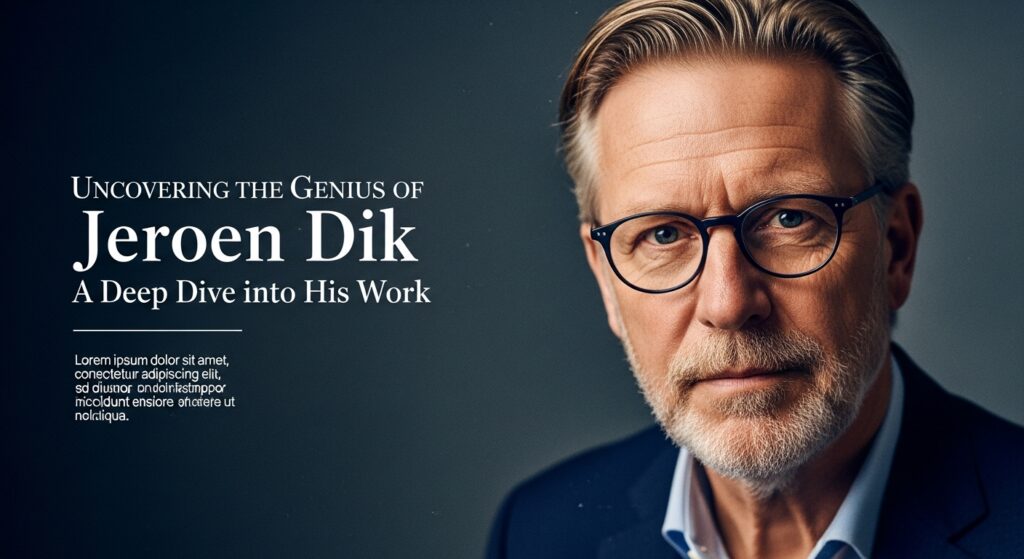
Jeroen Dik is a name that resonates within the vibrant world of art conservation. His innovative approach has not only transformed how we preserve our cultural treasures but has also sparked conversations about the significance of safeguarding history for future generations. With an impressive portfolio that spans various disciplines, Dik’s work invites us to delve deeper into the intersection of science and artistry.
As we embark on this journey through his career and discoveries, it becomes clear that Jeroen Dik is more than just a conservator; he’s a visionary pushing boundaries. From groundbreaking techniques to insightful research, his contributions have made waves in both academic and artistic circles. Let’s explore the genius behind Jeroen Dik and uncover what sets him apart in today’s ever-evolving landscape of art preservation.
Background Information on Dik’s Education and Career
Jeroen Dik’s journey into the world of art conservation began with a strong academic foundation. He pursued his studies at renowned institutions, where he specialized in both chemistry and the arts. This unique combination sparked a passion for preserving cultural heritage.
After completing his education, Dik embarked on a career that would intertwine science and creativity. He quickly gained recognition for his innovative approaches to analyzing artworks. His expertise not only lies in traditional methods but also extends to advanced technologies.
Throughout his career, he has collaborated with museums across Europe and beyond. These partnerships have allowed him to apply his knowledge practically, addressing challenges faced by conservators today. Each project reflects his commitment to safeguarding history while enhancing our understanding of art’s evolution over time.
Major Discoveries and Contributions in the Field of Art Conservation
Jeroen Dik has made significant strides in art conservation, reshaping how we understand and preserve artworks. His pioneering techniques focus on the intersection of science and artistry, bringing a new dimension to traditional practices.
One of his notable contributions is the development of advanced imaging technologies. These methods allow conservators to visualize underlying layers of paintings without invasive procedures. This non-destructive analysis reveals hidden details that can change our interpretation of an artwork’s history.
Dik’s research into materials degradation also stands out. By studying how various substances interact with environmental factors, he has provided valuable insights into preventing deterioration.
His work not only aids in preserving masterpieces but also enhances educational programs about cultural heritage. The implications are vast, influencing future generations’ appreciation for art conservation and its vital role in safeguarding our shared history.
The Importance of Dik’s Research in Preserving Cultural Heritage
Jeroen Dik’s research plays a pivotal role in the preservation of cultural heritage. His innovative techniques breathe new life into historical artifacts that might otherwise be lost to time.
With an emphasis on scientific analysis, Dik provides insights into the materials and methods used by artists centuries ago. This understanding not only aids in restoration but enriches our appreciation of artistic intent.
Preserving cultural heritage goes beyond maintaining objects; it’s about safeguarding stories and traditions for future generations. Every painting, sculpture, or artifact has its own narrative, and Dik’s work ensures these tales continue to resonate.
His findings can influence museum practices worldwide, allowing institutions to present art in ways that honor both the original creator and contemporary viewers. By bridging past and present, Jeroen Dik solidifies his legacy as a guardian of culture.
Case Studies: Analyzing Dik’s Techniques and Findings
One of Jeroen Dik’s remarkable case studies involves the analysis of a 17th-century Dutch painting. By employing advanced imaging techniques, he was able to reveal layers beneath the surface, showcasing hidden sketches and alterations made by the artist.
In another project, Dik focused on ancient artifacts subjected to environmental damage. His innovative use of non-invasive methods allowed for restoration without compromising authenticity. This approach set new standards in art conservation.
The examination of deteriorated textiles also stands out in his work. Here, Dik applied a combination of chemical analysis and historical context to understand fabric degradation over time.
Through these detailed investigations, he not only salvages but enhances our understanding of cultural heritage. Each study reflects his commitment to preserving history while pushing boundaries in preservation science.
Impact of Dik’s Work on the Art World
Jeroen Dik has profoundly influenced the art world through his innovative approaches to conservation. His techniques have transformed how we understand and preserve artworks, offering fresh perspectives that challenge traditional methods.
Artists and conservators alike are now embracing his research, recognizing its potential for safeguarding cultural heritage. By blending science with artistry, Dik’s work fosters a deeper appreciation for both historical artifacts and contemporary art forms.
Moreover, the collaborations he has initiated across disciplines have sparked new dialogues about preservation strategies. This cross-pollination of ideas not only enhances technical skill but also enriches artistic expression.
Institutions worldwide are adopting his findings into their practices. As a result, artworks once thought irreparable can now be restored with greater precision and respect for their original intent. This impact is felt in galleries, museums, and among audiences who engage with these revitalized pieces of history.
Future Directions and Potential Applications of Dik’s Methods
Jeroen Dik’s innovative methods open up exciting possibilities for the future of art conservation. His techniques, grounded in scientific rigor, can revolutionize how we approach restoration projects.
One potential application lies in digital imaging technology. By integrating advanced scanning methods with his analytical processes, conservators could develop more precise restoration guidelines tailored to individual artworks.
Moreover, Dik’s findings on material aging offer insights that could lead to the creation of new preservation materials. These would not only enhance durability but also maintain the integrity of historical pieces.
Collaborations between universities and museums may yield further advancements as scholars adopt Dik’s research principles across disciplines. This interdisciplinary approach will foster a deeper understanding of cultural artifacts and their significance.
As global interest in heritage preservation grows, Jeroen Dik’s work is poised to inspire a new generation focused on safeguarding our collective history for years to come.
Conclusion
Jeroen Dik’s journey through the world of art conservation is a testament to his passion and dedication. His innovative techniques and groundbreaking discoveries have reshaped how we view and preserve cultural heritage. The depth of his research not only highlights the fragility of artworks but also emphasizes their immense value in understanding human history.
As he continues to explore new methodologies, the potential applications of his work extend beyond traditional boundaries. Museums, galleries, and institutions are increasingly recognizing the importance of incorporating scientific advancements into conservation practices.
The impact Jeroen Dik has made is profound, inspiring a new generation of conservators who appreciate both art and science. His legacy will undoubtedly guide future efforts in preserving our shared artistic treasures for years to come.